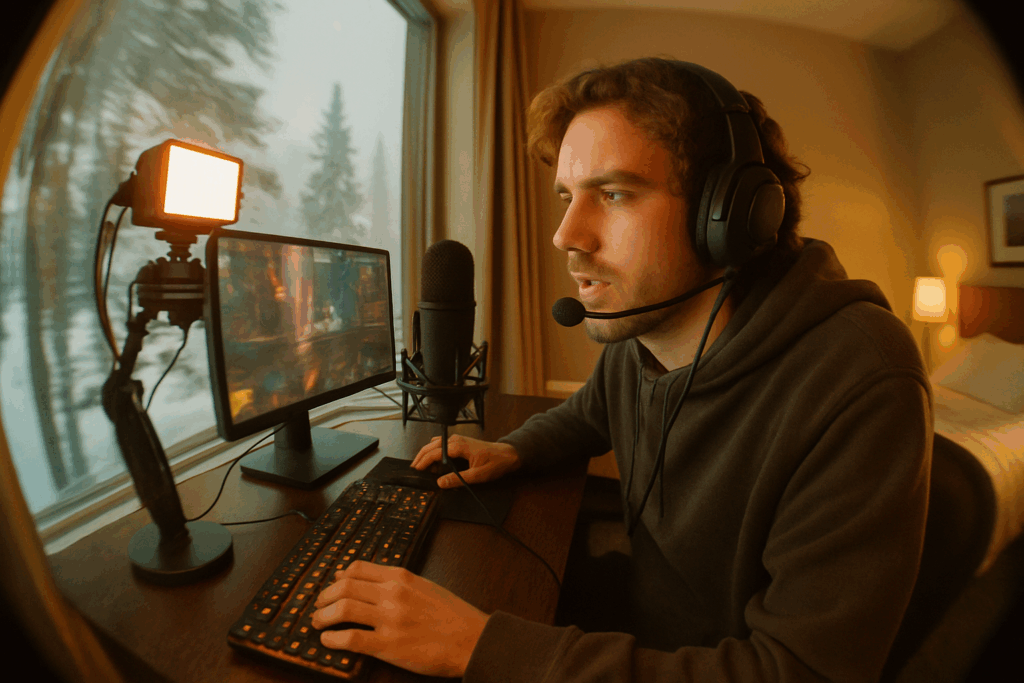

Your PC is slow.
Even though you paid good money for it.
You reboot. You close every tab. You whisper sweet nothings to the task manager.
Nothing changes.
I’ve watched people waste hours on this. Trying registry cleaners. Disabling services they don’t understand.
Installing tools that promise miracles (and) deliver malware.
Settings Gmrrmulator? Yeah, I’ve tested dozens of them. Some work.
Most don’t. A few are outright dangerous.
This isn’t another hype piece. No screenshots of fake before/after benchmarks. No “just click once and win” nonsense.
I’ll tell you what these tools actually do. Whether they’re safe. And whether you need one at all.
You’ll know by the end (no) guessing. No fluff. Just real performance data and real consequences.
What Settings Optimizers Actually Do
A settings optimizer is software that changes your system’s knobs and dials for you.
It tweaks things like graphics settings, Windows services, power plans, and network behavior (all) to push performance, stretch battery life, or stop crashes.
I’ve used a few. Most are either too aggressive (and break something) or too timid (and do nothing).
Think of it like a pit crew for your laptop (except) sometimes the crew hasn’t read the manual.
They don’t guess. They apply profiles. Like Max Performance Mode if you’re gaming.
Or Battery Saver Mode if you’re on a plane with no outlet.
The Gmrrmulator is one of them. It’s built around real hardware detection. Not blanket rules.
It checks your GPU, CPU, RAM, and even your SSD model before deciding what to adjust.
That matters. Because turning off “Superfetch” helps some machines and cripples others.
I turned it off on my old Dell. System froze twice in one day.
So yeah. Not all optimizers work the same way.
Some just disable everything they don’t recognize. That’s lazy.
Others ask questions first. Good ones.
Do you game? Stream? Edit video?
Run VMs?
If it doesn’t ask (walk) away.
Settings Gmrrmulator isn’t magic. It’s configuration. Automated, tested, and scoped.
I’m not sure it fixes thermal throttling. But it does stop Windows from waking your PC at 3 a.m. to install updates.
Pro tip: Always check what a tool disabled before rebooting.
You’ll see exactly which services got silenced.
And if you’re not comfortable reading that list? Don’t run it.
Your machine is yours. Not theirs.
Are They Safe? Let’s Cut the Hype.
I’ve installed dozens of system optimizers. Some worked. Most didn’t.
A few broke things.
The Good: They can help non-technical users tweak things they’d never find in Windows Settings. Like disabling background telemetry or adjusting GPU scheduling for older gaming rigs. Real gains happen (but) only in narrow cases.
I wrote more about this in Updates gmrrmulator.
Not magic. Just targeted tweaks.
You’re not stupid for using one. You’re just trying to get more out of your machine.
The Bad: Aggressive settings can crash your system mid-game or kill sleep mode entirely. I’ve had laptops wake up every 90 seconds because some optimizer “fixed” power management. (Spoiler: it didn’t.)
The Risky: Free tools often bundle adware, browser hijackers, or worse. One “PC Booster” I tested installed three toolbars and changed my default search engine (without) asking. And no, turning off “Windows Update notifications” doesn’t make your PC faster.
It just hides problems until they explode.
Here’s what nobody says loud enough: Settings Gmrrmulator is fine (if) you know exactly what each toggle does.
But most people don’t.
They click “Improve Now” and hope. That’s how you lose restore points. That’s how you end up reinstalling Windows because the registry cleaner deleted something key.
Always back up first. Use System Restore. Or better (create) a full disk image.
Don’t skip this step.
Ask yourself: Do I actually need this? Or am I chasing speed because the app told me I was “running at 42% efficiency”?
That number means nothing.
Real performance comes from hardware, drivers, and clean software. Not dashboard sliders.
You don’t need ten tools doing one thing poorly. You need one thing done right.
How to Spot a Great Optimizer (and Avoid the Junk)

I’ve installed more “PC speed-up” tools than I care to admit. Most broke something. A few actually helped.
Here’s how to tell which is which.
First (reversibility.) If it doesn’t offer one-click restore of all changes, walk away. Not “some” settings. All. I once used a tool that claimed to “improve startup” and left me with no audio driver.
No backup. No undo. Just silence and regret.
(Yes, I rebooted three times.)
Does it explain what it’s changing? And why? If not, it’s a black box.
And black boxes break things slowly. You want transparency. Not magic smoke.
Check real reviews. Not the five-star blurbs on its own site. Go to trusted tech forums or sites like PCMag or Tom’s Hardware.
Search for recent posts. Tools rot fast. What worked in 2021 might crash Windows 11 today.
Specificity beats vagueness every time. “Gaming performance optimizer” is credible. “Make your PC lightning fast!” is nonsense. Lightning fast at what? Loading Notepad?
Rendering 4K video? It’s marketing fluff hiding thin code.
The Updates Gmrrmulator nails this. It targets known Windows telemetry and background bloat (nothing) else. No promises about “boosting FPS by 300%.” Just clean, documented, reversible tweaks.
If a tool says it fixes “everything,” it fixes nothing well.
Ask yourself: Would I let this run on my work laptop?
If you hesitate. Don’t install it.
I keep a list of three tools I trust. The rest go straight to the recycle bin.
You should too.
The Free Alternative: A 10-Minute Manual Tune-Up
I did this myself last Tuesday. Took nine minutes. My laptop stopped sounding like a jet engine.
First: switch your Windows Power Plan to High Performance. Not Balanced. Not Power Saver.
High Performance. It’s buried in Control Panel > Hardware and Sound > Power Options.
Second: open Task Manager (Ctrl+Shift+Esc), go to Startup, and disable anything you don’t recognize or don’t use daily. Spotify? Fine.
Adobe Updater? Kill it.
Third: update your graphics drivers directly from NVIDIA, AMD, or Intel. Not through Windows Update. Their installers are cleaner and faster.
This isn’t magic. It’s maintenance. If you do all three and still feel sluggish, then yeah (maybe) look at tools built for deeper tuning.
Like the Settings Gmrrmulator. Or check out the New updates gmrrmulator if you want what’s actually new.
Your System Doesn’t Need Magic. It Needs Honesty
My laptop used to freeze mid-sentence. Yours does too, doesn’t it?
A sluggish device isn’t just annoying. It steals time. It kills focus.
It makes you second-guess your own workflow.
Settings Gmrrmulator sounds like an answer. But most “optimizers” are just noise. Or worse, risk.
I’ve seen what happens when people skip the checklist. Registry tweaks gone wrong. Background processes multiplying.
A “faster” system that’s actually less stable.
So before you click Download: stop.
Try the 10-minute manual tune-up first. Clear cache. Kill startup junk.
Update drivers. No install. No permissions.
Just control.
It fixes more than half the slowdowns I see.
And if you still need help? Then revisit the checklist in Section 3. Not before.
Your system deserves better than hope.
Do the tune-up now.
 There is a specific skill involved in explaining something clearly — one that is completely separate from actually knowing the subject. Annielle Benefieldstore has both. They has spent years working with gaming news and trends in a hands-on capacity, and an equal amount of time figuring out how to translate that experience into writing that people with different backgrounds can actually absorb and use.
Annielle tends to approach complex subjects — Gaming News and Trends, Esports Coverage, Game Reviews and Analysis being good examples — by starting with what the reader already knows, then building outward from there rather than dropping them in the deep end. It sounds like a small thing. In practice it makes a significant difference in whether someone finishes the article or abandons it halfway through. They is also good at knowing when to stop — a surprisingly underrated skill. Some writers bury useful information under so many caveats and qualifications that the point disappears. Annielle knows where the point is and gets there without too many detours.
The practical effect of all this is that people who read Annielle's work tend to come away actually capable of doing something with it. Not just vaguely informed — actually capable. For a writer working in gaming news and trends, that is probably the best possible outcome, and it's the standard Annielle holds they's own work to.
There is a specific skill involved in explaining something clearly — one that is completely separate from actually knowing the subject. Annielle Benefieldstore has both. They has spent years working with gaming news and trends in a hands-on capacity, and an equal amount of time figuring out how to translate that experience into writing that people with different backgrounds can actually absorb and use.
Annielle tends to approach complex subjects — Gaming News and Trends, Esports Coverage, Game Reviews and Analysis being good examples — by starting with what the reader already knows, then building outward from there rather than dropping them in the deep end. It sounds like a small thing. In practice it makes a significant difference in whether someone finishes the article or abandons it halfway through. They is also good at knowing when to stop — a surprisingly underrated skill. Some writers bury useful information under so many caveats and qualifications that the point disappears. Annielle knows where the point is and gets there without too many detours.
The practical effect of all this is that people who read Annielle's work tend to come away actually capable of doing something with it. Not just vaguely informed — actually capable. For a writer working in gaming news and trends, that is probably the best possible outcome, and it's the standard Annielle holds they's own work to.