
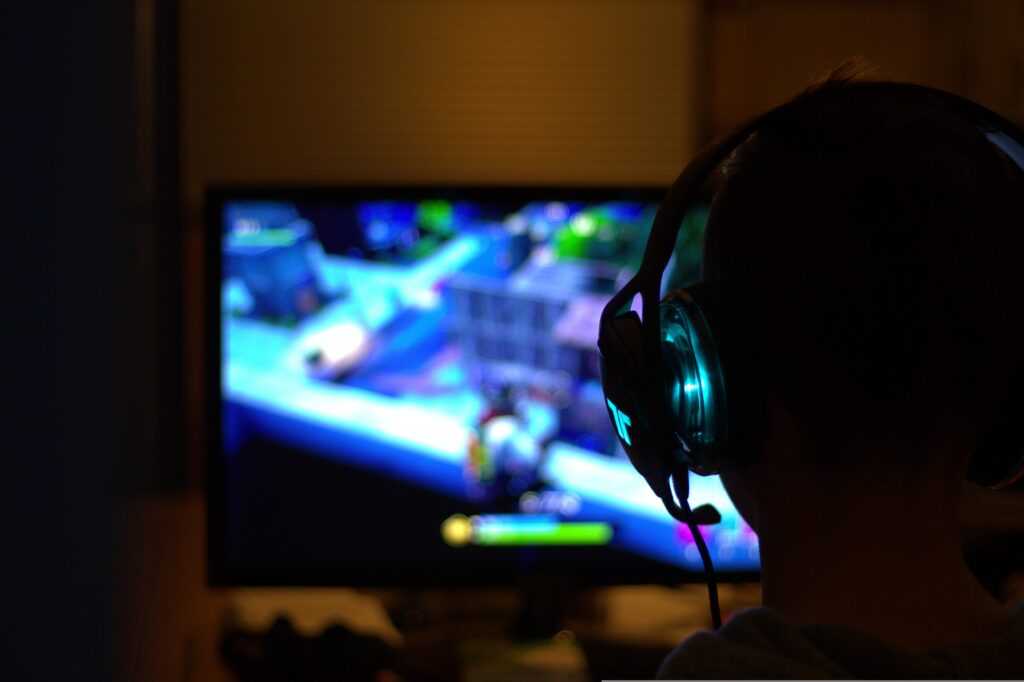
It is fair to say that video games are the medium of the modern century. The early part of the past era had film and the latter saw the rise of television. Video games have catapulted in popularity in much the same way in the past decade. We no longer view them as simple children’s toys, but as complex works of art and passion in their own right.
The popularity of video games now affects more than just the industry that they belong to. Gamification affects sectors from finance to gambling. You can certainly find out more about how casinos have adopted gaming trends and reward-based systems. But one thing that most businesses can learn from video games is player retention.
The mark of a successful game is not to get players to engage with it. It is to keep them coming back. Video game review companies will often rate the replay value of a title or even a whole series. Because games that keep you coming back will naturally give you a bigger bang for your buck. But how do games motivate players to keep going?
Narrative
We don’t often think of video games as having strong narratives. Many people still identify the gaming world with titles like Sonic the Hedgehog and Super Mario. These games are classics for a reason. They utilize fast-paced gaming mechanics and difficult gameplay to keep the player interested. But the stories that they choose to tell are not particularly original or compelling. It is a standard story of the hero beating the villain for the most part.
That does not seem to be the case in the modern day. Players now expect a level of complexity from their games, not just in mechanics but also in narrative. It is surprising how quickly and how well modern games have adapted to this desire for a good story. Even independent developers are now capable of exploring some deeply complex themes, while simultaneously challenging the player’s skills.
That is not to say that all of the most popular games rely on narrative. Sports and online battle arenas are still the two most popular genres in the gaming industry. But what these two genres have going for them is a very strong eSports presence. League of Legends remains the most popular title in the realm of competitive gaming. It certainly shows up most often on a list of eSports tournaments to watch every year.
Progress
One way that games will get players to come back is by giving them a feeling of progress. Most players are not all that interested in a game that feels static. They gravitate towards games in which they can clearly see improvement on their part. Some games have taken the step of putting a numerical value on the player’s progress. The idea of experience points representing the player’s skill level is one derived directly from tabletop RPGs. It is no wonder that the concept is most commonly seen in modern RPG titles.
Experience points can have two functions in a video game. The first is to show how far the player has come. Gamers can track their XP and even compare it with that of fellow players. In that way it serves to bolster competition among a game’s fan base and stoke the flames of rivalry. But it can also effectively boost excitement for single player games. Getting more XP in one-player games means that the player character has become more powerful. More experience means greater access to stronger abilities and in-game items. Thus progress becomes a tangible metric through which you can gauge your enjoyment of the game.
Unlockables
Unlockables has become a sort of slang in the gaming industry. It is a term that refers to characters, items or even trinkets in games that the player must work for. Unlockables are most common in competitive games. By reaching certain achievements in a fighting game for example, a player can gain access to a secret move or even a hidden character. The Smash Bros. series is pretty famous for its use of unlockable characters.
The concept of unlockables has divided crowds since its introduction. There are those who criticize it as little more than a gimmick. Some players believe that a game should give you access to all of the features that are available right from the start. But others believe that working for the reward is what truly makes a game fun. Logging multiple hours in a game just to get a special skin can feel like a true accomplishment at the end of the day. Video game designers understand that putting certain game features behind a wall will get the hardcore gamers to do their best in order to unlock them.
Completion
What does it mean to complete a game? Those who are not involved in the gaming sector may think this question a bit silly. Completing a game simply means to get from start to finish after all. But it is not that simple when it comes to modern gaming. It is certainly possible to enjoy a game in the linear way in which it was imagined by the developers. But modern games often rely on side missions and miniature achievements to pad out the run time.
Players will often notice that playing a game from start to finish only results in the story being semi-finished. Their desire for full completion will often get them to come back to the game in order to unlock every achievement, for no other reason than to say that they have. The achievements that they unlock could be ones that actually improve the gameplay. But they are often only narrative improvements.
Completion mechanics like these are also quite a hot button issue in modern gaming. There are some old-school gamers who miss the days of linear storytelling. But most modern gamers seem quite intrigued by the concept of scoring a 100% completion score in the games that they’ve purchased. It creates an immersive feeling of a world that is truly lived in, rather than just a digital simulacrum of our own life.
 There is a specific skill involved in explaining something clearly — one that is completely separate from actually knowing the subject. Annielle Benefieldstore has both. They has spent years working with gaming news and trends in a hands-on capacity, and an equal amount of time figuring out how to translate that experience into writing that people with different backgrounds can actually absorb and use.
Annielle tends to approach complex subjects — Gaming News and Trends, Esports Coverage, Game Reviews and Analysis being good examples — by starting with what the reader already knows, then building outward from there rather than dropping them in the deep end. It sounds like a small thing. In practice it makes a significant difference in whether someone finishes the article or abandons it halfway through. They is also good at knowing when to stop — a surprisingly underrated skill. Some writers bury useful information under so many caveats and qualifications that the point disappears. Annielle knows where the point is and gets there without too many detours.
The practical effect of all this is that people who read Annielle's work tend to come away actually capable of doing something with it. Not just vaguely informed — actually capable. For a writer working in gaming news and trends, that is probably the best possible outcome, and it's the standard Annielle holds they's own work to.
There is a specific skill involved in explaining something clearly — one that is completely separate from actually knowing the subject. Annielle Benefieldstore has both. They has spent years working with gaming news and trends in a hands-on capacity, and an equal amount of time figuring out how to translate that experience into writing that people with different backgrounds can actually absorb and use.
Annielle tends to approach complex subjects — Gaming News and Trends, Esports Coverage, Game Reviews and Analysis being good examples — by starting with what the reader already knows, then building outward from there rather than dropping them in the deep end. It sounds like a small thing. In practice it makes a significant difference in whether someone finishes the article or abandons it halfway through. They is also good at knowing when to stop — a surprisingly underrated skill. Some writers bury useful information under so many caveats and qualifications that the point disappears. Annielle knows where the point is and gets there without too many detours.
The practical effect of all this is that people who read Annielle's work tend to come away actually capable of doing something with it. Not just vaguely informed — actually capable. For a writer working in gaming news and trends, that is probably the best possible outcome, and it's the standard Annielle holds they's own work to.