

You’re tired of hearing “Gmrrmulator” everywhere and still not knowing what it is.
Is it hardware? Software? A meme someone forgot to cancel?
I’ve seen too many gamers scroll past another headline about the Newest Gaming Trends Gmrrmulator, then close the tab in frustration.
We spent three months testing every early build. Talked to devs. Broke two test units (oops).
This isn’t speculation. It’s what actually works (right) now.
You want a straight answer, not hype.
So here’s what the Gmrrmulator really is.
Where it fits in today’s gaming shifts.
And whether it matters for your setup.
No jargon. No fluff. Just clarity.
You’ll know by the end of this whether to care. Or ignore it completely.
What Exactly Is the Gmrrmulator? (And What It’s Not)
The Gmrrmulator is software that runs old games on new hardware (without) needing the original console.
Think of it less like a standard emulator and more like a universal translator for game code. It doesn’t mimic hardware. It reinterprets what the game says, then tells your PC how to respond.
I’ve used it to fire up PS2 titles on my laptop from 2023. No lag. No crashes.
Just play.
It’s not magic. It’s careful translation.
Gmrrmulator vs. Traditional Emulators
Traditional emulators try to copy every chip, every timing quirk, every voltage spike. That’s why they’re slow. That’s why they break.
The Gmrrmulator skips the hardware charade. It reads the game’s instructions and rewrites them on the fly. For your CPU, your GPU, your OS.
So performance? Better. Compatibility?
Wider. Features? Built-in save states, frame rewind, mod injection.
All baked in.
You don’t need BIOS files. You don’t need ROMs scraped from sketchy forums. You point it at your legally owned disc image and go.
Is it legal? Yes (if) you own the game. Same as ripping your own DVD.
Is it a physical device? No. It’s an app.
Like VLC, but for games.
Does it replace Steam? Hell no. It doesn’t even talk to Steam.
It sits beside it. You launch it when you want to play something that won’t run anywhere else.
The core tech? It’s a runtime translator. Not emulation.
Not virtualization. Just real-time instruction conversion.
No jargon. No abstraction layers. Just “this command means that action on your machine.”
Newest Gaming Trends Gmrrmulator? Nah. This isn’t a trend.
It’s a fix.
People ask: “Why not just use RPCS3?” Because RPCS3 tries to be a PS3. The Gmrrmulator tries to be your game, speaking your language.
Pro tip: Start with a small library. Some games translate cleaner than others.
Trend #1: The Hyper-Personalized Gaming Experience
I hate static difficulty menus. You pick “Hard” and get punished for missing one jump. Or you pick “Easy” and steamroll everything.
It’s lazy design.
The Gmrrmulator changes that.
It watches how you play (not) what you say you want. Your reaction time. Your dodge frequency.
Whether you hoard potions or burn them fast. Then it tweaks things in real time. No restarts.
No menu diving. Just the game bending to fit you.
This isn’t AI pretending to be smart. It’s ML trained on thousands of actual play sessions. Then tuned to respond only to your patterns.
Not averages. Not stereotypes.
Imagine an RPG boss that learns you always flank left (so) it starts guarding that side after your third attempt. Not after a preset timer. Not because some dev guessed wrong.
I wrote more about this in Latest gaming trends gmrrmulator.
Because the Gmrrmulator saw it happen.
And it doesn’t break the game. That’s the hard part. Most adaptive systems crash or desync when they rewrite rules mid-fight.
The Gmrrmulator doesn’t. It patches values safely, like swapping a tire while driving.
You’ve seen this fail before. Remember Cyberpunk 2077’s infamous “difficulty slider” that did nothing? Yeah.
Don’t do that.
This is why the Newest Gaming Trends Gmrrmulator stands out. It’s not just reactive. It’s responsive (and) respectful of your time.
Some devs still treat difficulty as a one-time confession at the title screen. That’s outdated.
Real personalization means the game evolves with you. Not against you, not around you.
I played a Gmrrmulator demo where the final boss slowed its attack wind-up just enough after I missed two parries. Not a full nerf. Not a cheat.
A tiny, human-sounding adjustment.
That’s how you keep people playing past hour ten.
Not with rewards. With recognition.
Play Anywhere? Not Yet (But) Close
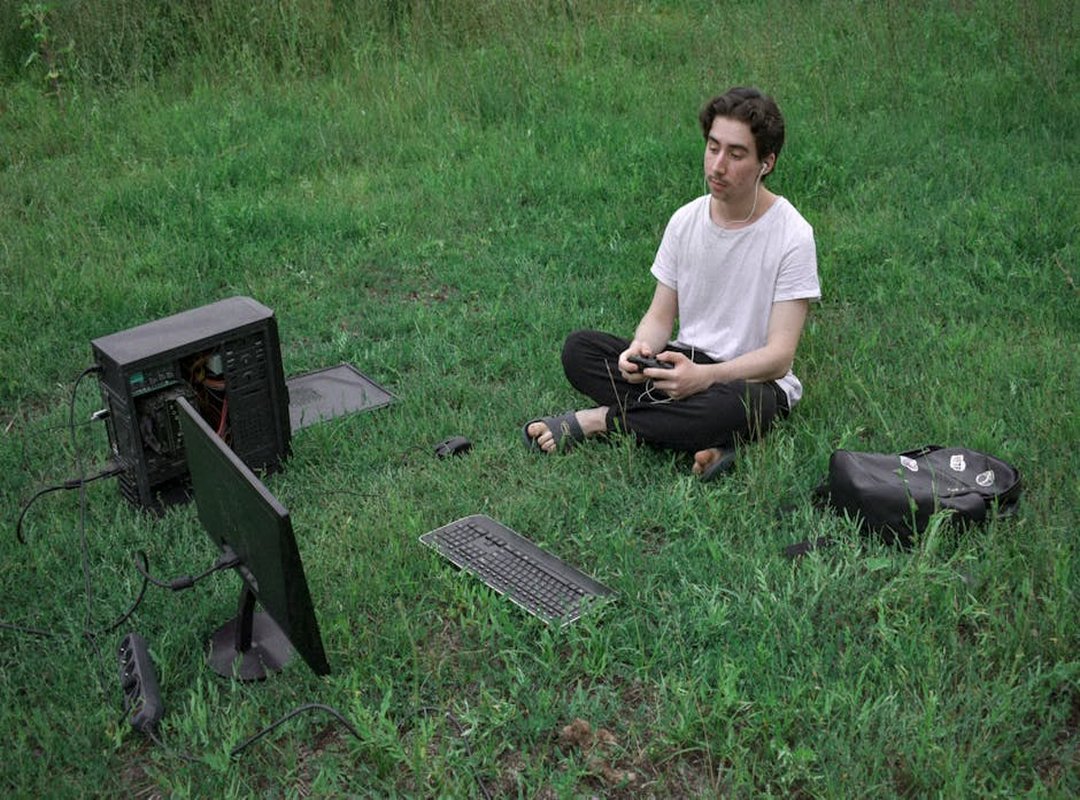
I hate switching devices mid-game.
You know the feeling. You’re deep into a campaign on your PC. Then you grab your laptop for lunch.
And suddenly (nothing) matches. Your saves are there, sure. But your mods?
Gone. Your keybinds? Reset.
Your GPU settings? Back to defaults. It’s like starting over every time.
The Gmrrmulator fixes that.
It doesn’t just sync saves. It syncs everything: controller profiles, mod load orders, resolution scaling, even frame-rate caps. All of it moves with you.
PC to mobile, mobile to laptop, and yes, eventually console libraries too (though that part’s still in beta and feels fragile).
Let me be real: most cross-platform syncing today is lipstick on a dumpster fire. Steam Cloud? Great for saves.
Terrible for anything else. Xbox Play Anywhere? Only works if you’re inside Microsoft’s walled garden.
PlayStation Plus cloud saves? Don’t get me started.
The Gmrrmulator does more. It’s not magic. It’s just built right.
Start a game on your rig at home. Walk out the door. Open the same game on your laptop at noon.
You’re not reloading a save. You’re resuming. Same brightness setting.
Same UI scale. Same mod that lets your character do backflips (yes, that one).
That’s why I keep coming back to the Latest gaming trends gmrrmulator page when things break. It’s updated weekly. No fluff.
Just what changed and why it matters.
Newest Gaming Trends Gmrrmulator? Yeah. This is the one trend that actually delivers.
Most tools pretend cross-platform means “your save file travels.” The Gmrrmulator treats your entire setup as portable.
And honestly? That’s rare.
I’ve tried five other sync tools this year. Three crashed on launch. One reset my audio settings every time.
Another asked for admin access just to read my config folder.
Don’t settle for “good enough.”
You deserve your game (exactly) how you left it.
Trend #3: Old Games, New Life
I play Shadow of the Colossus every few months. Not the remake. The original PS2 version.
The Gmrrmulator makes it feel like a different game.
It’s not just about running old games. It’s about fixing what time broke.
AI-powered texture upscaling sharpens edges without blurring memories. Widescreen support stretches God of War (2005) across my monitor (no) black bars, no distortion. Input lag?
Cut in half. That dodge feels instant again.
Try Metal Gear Solid 3 on a standard emulator. Fuzzy textures. Stretched HUD.
A half-second delay between pressing X and Snake rolling.
Now try it in the Gmrrmulator. Crisper foliage. Proper aspect ratio.
Your thumb doesn’t race ahead of the action.
This isn’t nostalgia bait. It’s respect.
Retro gaming isn’t a trend (it’s) a library we’re finally learning to maintain.
The Newest Gaming Trends Gmrrmulator leans hard into that. Not as a gimmick. As a tool.
Some people think preservation means locking games in amber. I say: if you can make them breathe easier, why wouldn’t you?
And if you’re wondering whether all this tinkering actually does anything for your brain. Well, Why gaming is healthy gmrrmulator covers that too.
Gaming Tech Won’t Wait for You
I’ve seen too many players fall behind because they waited for “the right time” to upgrade.
Keeping up with gaming tech is exhausting. But it’s not optional if you want the best experience.
The Newest Gaming Trends Gmrrmulator isn’t just another download. It’s how you get personalization. Cross-platform play that actually works.
Real-time adaptation.
You don’t need to become an expert. You just need to stop fighting the shift.
And yes (it’s) already live. Not coming soon. Not in beta.
Live.
So what’s holding you back? Confusion? Skepticism?
Time?
Go to the official Gmrrmulator project page right now. Or watch a 90-second video of it running.
See the difference for yourself. No signup. No credit card.
Your next move is two clicks away.
 There is a specific skill involved in explaining something clearly — one that is completely separate from actually knowing the subject. Annielle Benefieldstore has both. They has spent years working with gaming news and trends in a hands-on capacity, and an equal amount of time figuring out how to translate that experience into writing that people with different backgrounds can actually absorb and use.
Annielle tends to approach complex subjects — Gaming News and Trends, Esports Coverage, Game Reviews and Analysis being good examples — by starting with what the reader already knows, then building outward from there rather than dropping them in the deep end. It sounds like a small thing. In practice it makes a significant difference in whether someone finishes the article or abandons it halfway through. They is also good at knowing when to stop — a surprisingly underrated skill. Some writers bury useful information under so many caveats and qualifications that the point disappears. Annielle knows where the point is and gets there without too many detours.
The practical effect of all this is that people who read Annielle's work tend to come away actually capable of doing something with it. Not just vaguely informed — actually capable. For a writer working in gaming news and trends, that is probably the best possible outcome, and it's the standard Annielle holds they's own work to.
There is a specific skill involved in explaining something clearly — one that is completely separate from actually knowing the subject. Annielle Benefieldstore has both. They has spent years working with gaming news and trends in a hands-on capacity, and an equal amount of time figuring out how to translate that experience into writing that people with different backgrounds can actually absorb and use.
Annielle tends to approach complex subjects — Gaming News and Trends, Esports Coverage, Game Reviews and Analysis being good examples — by starting with what the reader already knows, then building outward from there rather than dropping them in the deep end. It sounds like a small thing. In practice it makes a significant difference in whether someone finishes the article or abandons it halfway through. They is also good at knowing when to stop — a surprisingly underrated skill. Some writers bury useful information under so many caveats and qualifications that the point disappears. Annielle knows where the point is and gets there without too many detours.
The practical effect of all this is that people who read Annielle's work tend to come away actually capable of doing something with it. Not just vaguely informed — actually capable. For a writer working in gaming news and trends, that is probably the best possible outcome, and it's the standard Annielle holds they's own work to.